

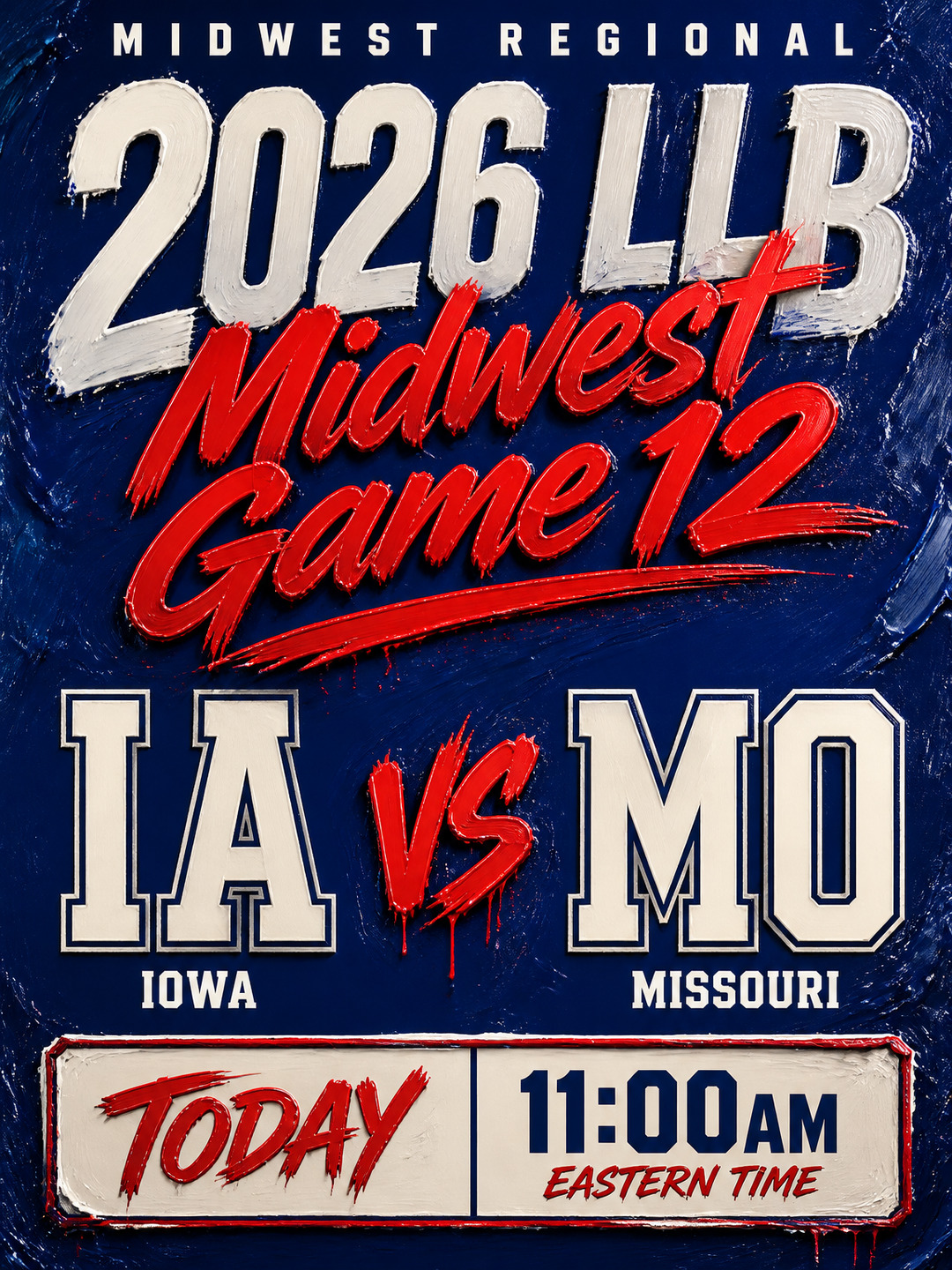
A regular-season schedule is predictable. You play the same conference opponents every year, you know their colors, and you have their artwork saved from last season.
A bracket is not that. A tournament field pulls in regional qualifiers you’ve never heard of, all-star squads assembled three weeks ago, and — at the bigger events — teams that flew in from another country. By the semifinals you might be posting about programs that didn’t exist in May.
Your graphics need to handle all of them the same way.
Every Team Gets the Same Treatment
The Tournament Matchup layout identifies each team by a large styled abbreviation with the full name beneath it — IA vs MO, JPN vs CUR. Type both sides and the card is built.
That matters more than it sounds. When identity comes from something you type rather than something you have to source, a one-weekend all-star squad gets exactly the same quality of post as the host program. Nobody in your bracket looks like an afterthought because their side of the card was easier to fill.
It’s also how broadcasts have always done it. At thumbnail size on a phone, two letters land before a crest resolves.
What Actually Goes on the Card
Four things carry a tournament matchup post:
- The round or stakes — “CHAMPIONSHIP GAME”, “ELIMINATION GAME”, “SEMIFINAL”. This is the headline, not the team names. It’s what makes someone stop scrolling.
- The event line — “SOUTHEAST REGIONAL”, “2026 STATE TOURNAMENT”. Small, above the headline, so people know which bracket this is.
- The two teams — abbreviation, full name, and optionally a region or country line.
- The time — day and start time, in a stated timezone.
Everything else is optional. A broadcast or sponsor mark sits at the bottom with its own lead-in text, so “WATCH ON” and the network logo read as one unit.
Teams From Other Countries
At events that draw international sides, the team name often is the country. Type it that way: “JAPAN” with the abbreviation “JPN”, “CURAÇAO” with “CUR”. Use the optional region line for the qualifying bracket — ASIA-PACIFIC, CARIBBEAN, EUROPE-AFRICA.
If you have a national flag, it works in the team slot. Flags are wide 3:2 rectangles rather than the square crests most sports layouts assume, so this one reserves landscape space for a mark instead of cropping it into a badge.
Pick One Color and Run the Whole Weekend
The strongest thing you can do across a multi-day tournament is stay visually identical from game to game. Same layout, same color, same type — only the teams and the time change.
The color you choose drives the entire background field rather than a single accent, so every game of a weekend can run in one color and read as a set. By Sunday, people recognize your posts in their feed before they read a word of them.
A Simple Tournament Cadence
- Night before or morning of — matchup card for each game
- Immediately after — final score for the result
- End of the bracket — champions post for the winner
Three posts per game day, all in the same color, all in the same style. Every team in the field treated like they belong there — because on the card, they do.